 February 11, 2016
 0 Comments
 Ebooks
Free Download Basic Principles of Curriculum and Instruction
If you still require a lot more publications Basic Principles Of Curriculum And Instruction as recommendations, visiting browse the title and also theme in this website is available. You will locate even more lots books Basic Principles Of Curriculum And Instruction in different disciplines. You can also as quickly as feasible to review the book that is currently downloaded. Open it as well as conserve Basic Principles Of Curriculum And Instruction in your disk or gadget. It will certainly ease you wherever you require the book soft documents to read. This Basic Principles Of Curriculum And Instruction soft data to check out can be referral for everyone to improve the skill and ability.
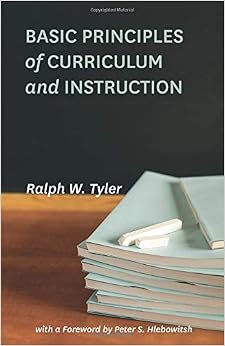
Basic Principles of Curriculum and Instruction

Free Download Basic Principles of Curriculum and Instruction
Pointer in deciding on the most effective book Basic Principles Of Curriculum And Instruction to read this day can be acquired by reading this page. You can find the most effective book Basic Principles Of Curriculum And Instruction that is sold in this world. Not only had actually the books published from this nation, but likewise the other nations. And currently, we intend you to read Basic Principles Of Curriculum And Instruction as one of the reading products. This is only one of the most effective publications to collect in this website. Consider the web page as well as search guides Basic Principles Of Curriculum And Instruction You can locate great deals of titles of guides offered.
Publication; nevertheless in the past time ends up being a sacral point to have by everybody. Numerous publications from slim to the extremely thick web pages exist. Today, for the innovation has created sophisticated, we will serve you guide not in the published means. Basic Principles Of Curriculum And Instruction is among the products of those books. This book model can be downloaded and install from the site web link that we offer in this web site. We provide you not just the best books from this nation, but many from outsides.
By downloading this publication soft file, you can begin reading Basic Principles Of Curriculum And Instruction from currently. It will not compel you to constantly read it every single time. Juts use your spare time even couple of mins. This is why when you intend to see how guide material is used; you must review it from the front web page. Yeah, invest your time to review it. This is our most suggested publication to review when you wish to go for some journeys and vacations.
It is not only to offer you the easy way but likewise to obtain guide is soft file systems. This is the reason that you could get guide immediately. By linking to net, your opportunity to locate and also get the Basic Principles Of Curriculum And Instruction as soon as possible. By clicking web link that is extended in this site, you could most likely to straight the book website. As well as, that's your time to get your favorite publication.
Review
"Tyler addresses the essential purposes of teaching in a way that still has relevance for contemporary students of education, and communicates to them how important and timeless the quality of the pupil-teacher interaction actually is." (Times Higher Education)
Read more
About the Author
Ralph W. Tyler (1902–94) was an American educator who worked in the field of assessment and evaluation. He served on or advised a number of bodies that set guidelines for the expenditure of federal funds and influenced the underlying policy of the Elementary and Secondary Education Act of 1965. Tyler chaired the committee that eventually developed the National Assessment of Educational Progress (NAEP). He was professor of education and dean of the Division of Social Sciences at the University of Chicago.
Read more
Product details
Paperback: 140 pages
Publisher: University of Chicago Press; First Edition, Revised edition (August 9, 2013)
Language: English
ISBN-10: 022608650X
ISBN-13: 978-0226086507
Product Dimensions:
5.5 x 0.4 x 8.5 inches
Shipping Weight: 0.3 ounces (View shipping rates and policies)
Average Customer Review:
4.3 out of 5 stars
58 customer reviews
Amazon Best Sellers Rank:
#135,601 in Books (See Top 100 in Books)
Basic Principles of Curriculum and InstructionBy Ralph W. Tyler. London: The University of Chicago Press Ltd.© 1949/2013. 128 pages. ISBN 13: 978-0-226-08650-7.Reviewed by Dan HaddadToo often in classrooms today, educational decisions are made with a lack of thoughtfulness and planning. Though there are many veteran teachers who are able to deliver effective instruction with perhaps minimal preparation, their lessons and teaching style often become stale and ineffective; based on outdated models and circumstances. Newer teachers frequently become overwhelmed with the myriad of responsibilities demanded of them and are often “flying by the seat of their pantsâ€, simply trying to get everything done.For these reasons in addition to others, Basic Principles of Curriculum and Instruction should be required for all educators at all levels if for no other reason than it provides a solid foundation from which to make long term curricular decisions to those who have not been exposed to this information before and for those who have, it provides a refresher and hopefully renews their dedication and motivation to provide the best structured educational experience possible. As the information is framed in large part as a school-wide process, this is also a valuable book for administrators both “in and outside of the building.â€Tyler goes through almost the entire process in depth from first leading the reader to ascertain what educational objectives a school should seek to attain. Next he discusses how to select learning experiences to achieve these objectives. He then talks about how learning experiences should be organized for the most effective instruction. After these three chapters which all dealt with the creation and implementation of the curriculum, he discusses evaluation of the effectiveness of the learning experiences and finally closes with a brief discussion about how a staff can work together to build a curricula.Though Basic Principles of Curriculum and Instruction was first published over 60 years ago the vast majority the information contained within the book is applicable and effective in today’s classrooms and schools. Tyler talks about assessing the starting point of each student as a crucial step when developing a curriculum. Once that information is obtained, it’s easier, and considerably more effective, to not only develop but also impart objectives on the students. Knowing what the learning gap is in each student makes it a lot easier to bridge. He was talking about differentiated instruction long before it was given a title. He also introduces the â€revolutionary†notion that perhaps schools should prepare students to do more than just contribute to society, but instead to lead and innovate. Both of these concepts seem ahead of their time and reflect what many educators now view as a given.Ultimately, Basic Principles of Curriculum and Instruction provides a clear and concise roadmap and starting point when developing curriculum. Tyler himself states at times throughout the book that there are simply some topics of curricula development that are beyond the purview of the text. It is up the schools, teams and individuals to use this as guide through which the particularities and needs of the school determine how to most effectively mold and develop these ideas to best serve their students.
Asma Bin AteeqWithout reading this book, the educators will design a poor curriculum. It is really important for all educators to look at it especially and curriculum designers. Like a typical designer, educators should make sure to keep the students’ desires and interests in mind, trying to make the activities easy and uncomplicated while making up for a lack of substance with plenty of fun and lack learning at the end of the day. These concepts and ideas are simplistic and lacking in structure and focus, which oftentimes led the teachers off-topic to peripheral subject. Looking back to my first year of teaching, my plans for the days seemed absent of imagination, intellectual rigor, and a clear sense of enduring value. In fact, I feel quite embarrassed at the plainness of my ideas compared to where I am now after reading the book. In Tyler’s book, the educators will learn how to design a curriculum, considering really important steps/stages.Having learned about Tyler's ideas, my understanding of curriculum design has broadened a great deal, and I am now able to have a much wider perspective on how to create a successful unit; one that enables me to actually have evidence that my students have deeply understood and absorbed the subject matter. With the Tyler's way, however, I am able to let go of my old habits of thinking and take on the assessor’s perspective, which is concerned with the criteria and validity for judging objectives. He goes into great detail on this step explaining where you should get the objectives for the curriculum you are writing.After reading chapter one, you will be able to begin identifying the goals by considering the five sources: the learner, the community, subjects, Philosophy, Psychology. Tyler further explains how we can help the students to reach the goal. He gives us a lot of advice, such as considering the student’s interests and needs, providing the students with different experiences so they can learn in different ways, and let the community know what is going on inside the school and combine them together. Selecting the means for the attainment or achievement of these objectives, such as what educational or teaching-learning experiences have to be provided for students and organizing these educational or teaching-learning experiences. The selection and organization of the educational experiences give evidence of how you may tie it all together in an organized and efficient way, scaffolding the knowledge-building process, which culminates in students creating a plan for how they would achieve it, a decidedly proactive approach compared to mere passive acceptance of information.Tyler suggests evaluating the outcomes or what have students attained or achieved. Your assessments will become much more interesting and relevant to the students’ decision-making process on a day-to-day basis, which will solve some queries that you probably had about how your performance tasks did not relate to the evidence or how you was simply not able to see the connection.Instead of having a vague idea of what you want to teach on a day-to-day or week-to-week basis, you will now be planning in advance, taking the units through steps as instructed by Tyler. I am convinced that this is the right approach to curriculum design. It is concerned with depth of insight, with being able to see into the validity of performance tasks in relation to ultimate assessment of understanding. I see now how simple I have been, when in actuality, my students would have benefited from having a teacher who had a clear roadmap with strategic directions in mind. I am confident now that my teaching and planning will be different.Work CitedTyler, R. W. (1949/2013). Basic principles of curriculum and instruction. Chicago: University of Chicago Press.
Basic Principles of Curriculum and Instruction PDF
Basic Principles of Curriculum and Instruction EPub
Basic Principles of Curriculum and Instruction Doc
Basic Principles of Curriculum and Instruction iBooks
Basic Principles of Curriculum and Instruction rtf
Basic Principles of Curriculum and Instruction Mobipocket
Basic Principles of Curriculum and Instruction Kindle

No comments:
Post a Comment